

By Dayne Hudson

When the weather warms up, some of us attempt to "diet".
Drop some body fat and get the abs sticking out is the goal of many, and some will take to any eating plan for weight loss to achieve this.
Whilst many people remember their calorie deficit, few remember or even take into consideration a refeed day.
But as you'll learn, there's much merit for including it in your diet and exercise plan.
As hard as it is for some to believe, eating to lose weight actually works - and I'm going to show you how!
So why have a refeed day?
What is a refeed day and how often should you have it?
THE RESEARCH
One of the main reasons I'd recommend a refeed day (apart from the obvious psychological benefits) is because of it's effects on leptin, often described as the satiety hormone.
Leptin regulates hunger, food intake, and energy expenditure and has a huge impact on our weight loss results.
When we diet and experience weight loss, our levels of leptin drop. This attributes to our poor moods when dieting - I'm willing to bet you know the feeling!
Research suggests that when this occurs, signals are sent to the brain to INCREASE feeding and REDUCE energy expenditure (1).
Not good news for our abs!
So you can see why you want to keep your leptin levels as high as possible; when your leptin levels fall you'll start getting loads of food cravings, when they're high your metabolism will be more efficient.
MORE ON FOOD CRAVINGS AND LEPTIN
Further research (2) investigated subjects in a leptin-deficient state by showing them pictures of well-liked food.
This elicited a desire to eat even after they had just eaten!
But different findings presented themselves AFTER leptin treatment - these pictures only elicited a desire to eat during fasting (2).
Now the latter was obviously similar to normal subjects in the real world, which reflects leptin’s ability to suppress activity in the striatum (pictured in red below), a sector of the brain involved in the pleasure and reward responses to food (2).
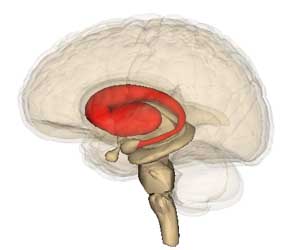
Additional research has found leptin replacement to decrease food intake and weight.
This was associated with reduced brain activity in regions related to hunger (3) - whilst leptin interestingly also increased brain activity in areas linked to satiety (3).
Whenever I'm writing diet plans or giving people weight loss tips, I tell them: "losing weight is simply the fight for satiety."
And it's as simple as that.
When you stay full, you don't feel the need to overeat. When you don't overeat (and eat how much I tell you) you lose weight!
So keeping leptin levels high are one of the primary goals during weight loss.
OK - SO HOW DO WE KEEP LEPTIN LEVELS HIGH?
One word: carbohydrates.
While we're still learning how many carbohydrates over what period exactly increases leptin levels - we know that they do increase with a high carb intake over 3 days (23).
However, one can assume that a refeed day would have positive effects on leptin levels, in addition to the psycholocical benefits, the reduced catabolism, and the refilling of muscle glycogen the excess carbohydrate intake accounts for (more on gycogen later.)
Generaly associated with weight gain, poor health and all the other rubbish but the truth is carbohydrates are poorly understood as I've written about before in another piece.
Onwards, and it's insulin that keeps leptin levels high (4).
As you know, insulin is secreted in response to carbohydrate intake, so the more carbohydrates we can eat whilst making sure we don't go into a calorie surplus, the better.
More detail on just how much we need later.
TRAINING AND LEPTIN LEVELS
Training significantly reduces our levels of leptin (5,6,7). Furthermore, leptin is also decreased as testosterone increases and decreases when estrogen levels rise (8).
GENERAL LIVING AND LEPTIN
Time of the day is also important, with levels of leptin higher between midnight and the early morning (9).
It's this reason that some of us experience a surpressed appetite during the night.
Short term fasting (24-72 hours) results in a decrease of leptin, even when there's no change in fat mass (10,11,12).
Emotional stress also causes an increase in the hormone (13) which explains why it's hard to eat during these periods of our lives.
WHY FEMALES SHOULD TAKE SPECIAL NOTE OF LEPTIN
Ladies, low levels of leptin might just have an effect on female repreduction hormones (14), as leptin is required for fertility (but moreso in mice).
Excess hunger and low levels of body fat paired with excessive exercise leads to the halt of the ovarian cycle and the cessation of menstruation (15).
This is quite common amongst girls competing in figure events.
It's not worth the risk; leptin levels outside the ideal range can have a poor effect on egg quality and outcome during in vitro (test tube) fertilization (16).
FURTHER BENEFITS TO THE REFEED DAY
The first cited study (1) also found restored leptin levels maintains weight loss and reverses the changes in brain activity experienced by all of us during dieting.
To quote from the paper:
"Leptin is a critical factor linking reduced energy stores to eating behavior. Potentially, leptin therapy could sustain weight loss by overriding the tendency toward energy conservation."
Other studies have led researchers to suggest that the adaptations in response to reduced levels of leptin may have come about as a protection against the threat of starvation, by limiting energy use and bolstering fat storage for energy (17,18).
This makes perfect sense in the context of evolution; when the caveman couldn't catch a meal, the low leptin levels signalled the storage of fat so he could survive.
But fast foward to today - and we're all very lucky we can afford the luxury of excess carbohydrates without having to break a sweat to get hold of them like our poor old ancestors.
And it's really that simple - this is why we do the refeed day - so we don't store fat like our ancestors would have during low levels of this hormone.
...BUT WAIT, THERE'S MORE
The refeed day will also boost your testosterone (19) and increase your pleasure and reward hormone dopamine (20).
Boosting leptin can also increase your libido (21) and your motivation (22) which is all good news.
But on top of this, it will also top up muscle glycogen.
We obviously lose glycogen during our workouts, so refilling the tank is important for energy levels in the gym (which obviously lead to weight loss) and to keep our muscles looking full.
There's nothing worse than flat looking muscles, I don't care how prominent your abs are.
HOW TO PLAN YOUR REFEED DAY
The day simply involves a surplus of carbohydrates.
One meal is not enough it seems to raise leptin levels - though watch this space in case new research surfaces.
However, this is where the science stops and I start.
I can give you great estimates and guidelines to carry us over from here.
Whilst there isn't any direct studies examining this that I know of, the hypothesis of the refeed day based on the above scientific literature is solid.
However, there are no direct recommended guidelines yet that have been tried and tested.
But you all know your bodies better than I do and will be able to take an estimated guess much more efficiently than me.
The leaner you are - the more refeeds you need.
The higher body fat percentage you have, the less frequent refeeds you need.
It's that simple.
10-15% body fat
If you're in this category, I'd recommend a refeed once every 10 days to start with and see how you go.
If you notice that low leptin levels are still hindering you, then bump it up to 2.
15% + body fat
I'd suggest one refeed every 2 weeks to start with. I can't see you needing much more than that.
20% +
Think about a refeed once every 3 weeks.
EXECUTION - WHAT TO DO AND HOW TO DO IT
What's your worst body part?
Make sure your refeed day is on the day you train that muscle group, as the high levels of insulin are obviously very anabolic!
Increase your calories for the day by 20-30% and make sure they all come from carbohydrates.
Start at 20% and if you feel you need to go up to 30%, then do so.
Reduce your protein intake by about 20% and keep your fats as low as possible; don't add olive oil to your salad or anything like that, just consume the fats that come with your carbohydrates (eg in bread, there's roughly 3 grams of fat in 2 slices).
Why keep your fats low? Because fats have no impact on leptin levels (23).
As we've learnt, carbohydrates do, so that's what we're aiming to increase!
EATING THE RIGHT TYPE OF CARBOHYDRATES
Aim for breads, pancakes, muffins, bagels etc - sounds tough doesn't it?!
DO NOT consume fructose - as this has no effect on leptin levels (24).
That's right - it's the pancakes and breads of the world you want to go after.
CONCLUSION
As hard as it is to believe, going nuts on pancakes and breads together with other delicious carbohydrates are a good thing to keep your weight loss on track whilst dieting.
It'll help you stay sane, prevent fat gain, boost your metabolism, but most importantly stop any potential binges that can put you back to square one.
Any eating plan to lose weight should factor in a refeed day somewhere at some point.
Whilst people get obsessed over fat burning foods, none will consider carbohydates as a macronutrient that can help them achieve weight loss!
Of course, small amounts of body fat (and I mean small) can be gained on a refeed day, but it's for your overall wellbeing and for the greater good.
You don't drive a large distance in one go, you stop to recuperate at various points so you can keep going strong.
The person who tries to do the whole lot in one go will fail everytime.
And it's the same principle here.
So aim for your 20-30% calorie surplus via carbohydrates, reduce your protein intake by 20%, consume minimal fats and stay away from fructose for the day.
And when your friends wonder how the hell you can eat so much when you're dieting - knock them over with some facts about leptin and explain to them that it's for the greater good!
"Stay Fit, Stay Flexed!"
REFERENCES
(2) Farooqi I.S., et al. Leptin regulates striatal regions and human eating behavior. Science. 2007;317:1355.
(3) Baicy K., et al. Leptin replacement alters brain response to food cues in genetically leptin-deficient adults.Proc. Natl. Acad. Sci. U. S. A. 2007;104:18276–18279. doi: 10.1073/pnas.0706481104.
(4) Kolaczynski JW, Nyce MR, Considine RV, Boden G, Nolan JJ, Henry R, Mudaliar SR, Olefsky J, Caro JF (May 1996). "Acute and chronic effects of insulin on leptin production in humans: Studies in vivo and in vitro". Diabetes 45 (5): 699–701.
(5) de Salles BF, Simão R, Fleck SJ, Dias I, Kraemer-Aguiar LG, Bouskela E (July 2010). "Effects of resistance training on cytokines". Int J Sports Med 31 (7): 441–450.
(6) Hickey MS, Considine RV, Israel RG, Mahar TL, McCammon MR, Tyndall GL, Houmard JA, Caro JF (November 1996). "Leptin is related to body fat content in male distance runners". Am. J. Physiol. 271 (5 Pt 1): E938–40.
(7) Hickey MS, Houmard JA, Considine RV, Tyndall GL, Midgette JB, Gavigan KE, Weidner ML, McCammon MR, Israel RG, Caro JF (April 1997). "Gender-dependent effects of exercise training on serum leptin levels in humans". Am. J. Physiol. 272 (4 Pt 1): E562–6.
(8) Ahima RS, Flier JS (2000). "Leptin". Annu. Rev. Physiol. 62 (1): 413–437.
(9) Sinha MK, Ohannesian JP, Heiman ML, Kriauciunas A, Stephens TW, Magosin S, Marco C, Caro JF (March 1996). "Nocturnal rise of leptin in lean, obese, and non-insulin-dependent diabetes mellitus subjects". J. Clin. Invest. 97 (5): 1344–7.
(10) Chan JL, Heist K, DePaoli AM, Veldhuis JD, Mantzoros CS (May 2003). "The role of falling leptin levels in the neuroendocrine and metabolic adaptation to short-term starvation in healthy men." J. Clin. Invest. 111 (9): 1409–1421.
(11) Kolaczynski JW, Considine RV, Ohannesian J, Marco C, Opentanova I, Nyce MR, Myint M, Caro JF (November 1996). "Responses of leptin to short-term fasting and refeeding in humans: a link with ketogenesis but not ketones themselves". Diabetes 45 (11): 1511–5.
(12) Kolaczynski JW, Ohannesian JP, Considine RV, Marco CC, Caro JF (November 1996). "Response of leptin to short-term and prolonged overfeeding in humans". J. Clin. Endocrinol. Metab. 81 (11): 4162–5.
(13) Otsuka R, Yatsuya H, Tamakoshi K, Matsushita K, Wada K, Toyoshima H (October 2006). "Perceived psychological stress and serum leptin concentrations in Japanese men". Obesity (Silver Spring) 14 (10): 1832–1838.
(14) Comninos AN, Jayasena CN, Dhillo WS (2014). "The relationship between gut and adipose hormones, and reproduction". Hum. Reprod. Update 20 (2): 153–74.
(15) "Leptin". From Wikipedia, the free encyclopedia.
(16) Anifandis G, Koutselini E, Louridas K, Liakopoulos V, Leivaditis K, Mantzavinos T, Sioutopoulou D, Vamvakopoulos N (April 2005). "Estradiol and leptin as conditional prognostic IVF markers". Reproduction 129 (4): 531–534.
(17) Ahima R.S., et al. Role of leptin in the neuroendocrine response to fasting. Nature. 1996;382:250–252. doi: 10.1038/382250a0.
(19) Forbes GB, Brown MR, Welle SL, Underwood LE. Hormonal response to overfeeding. Am J Clin Nutr. 1989 Apr;49(4):608-11.
(20) Volkow D, Wang GJ, Baler RD. Reward, dopamine and the control of food intake: implications for obesity. Trends Cogn Sci. 2011 Jan;15(1):37-46. doi: 10.1016/j.tics.2010.11.001. Epub 2010 Nov 24.
(21) Hausman GJ, Barb CR. Adipose tissue and the reproductive axis: biological aspects. Endocr Dev. 2010;19:31-44. doi: 10.1159/000316895. Epub 2010 Jun 15.
(22) Davis JF. Adipostatic regulation of motivation and emotion. Discov Med. 2010 May;9(48):462-7.
(23) Dirlewanger M, di Vetta V, Guenat E, Battilana P, Seematter G, Schneiter P, Jequier E, Tappy L. Effects of short-term carbohydrate or fat overfeeding on energy expenditure and plasma leptin concentrations in healthy female subjects. Int J Obes Relat Metab Disord. 2000 Nov;24(11):1413-8.
(24) Teff KL, Elliot SS, Tschop M, Kieffer TJ, Rader D, Heiman M, Townsend RR, Keim NL, D'Alessio D, Havel PJ. Dietary fructose reduces circulating insulin and leptin, attenuates postprandial suppression of ghrelin, and increases triglycerides in women. J Clin Endocrinol Metab. 2004 Jun;89(6):2963-72.


